During the time that I have covered the topic of citizen emergency preparedness, one of the most surprising things I’ve found is that there is no major elected official who has taken the lead on the issue.
It’s surprising for a number of reasons: natural disasters and terrorism dominate the headlines and will continue to for the foreseeable future; citizen preparedness is pretty much unassailable, bipartisan, patriotic and community-building topic; and even the smallest interest in Washington has at least one political champion (but not public preparedness). And, with much to do, there is a great opportunity to have a positive policy and political impact.

Yet, there is no elected official who has taken the lead on the issue which is one of the reasons why the nation still has not made appropriate progress on it. Citizen preparedness requires some political leader who will make sure it is not ignored in the legislative process as it has been to date. In fact, I would argue the lack of political leadership is one reason why citizen preparedness has not received requisite attention from the government, the media and the public.
So, is there any elected official is interested in the job? Or, do readers have any ideas of who should do it?
These icons link to social bookmarking sites where readers can share and discover new web pages.
Email Entry
Tags: Congress · Preparedness Ideas · Volunteer Opportunities
In a speech to the Red Cross’s Emergency Crisis Data Summit last week, FEMA head Craig Fugate focused his remarks on the role of technology in disaster preparedness and response. However, he touched on another important theme which I wanted to highlight — that Americans have a personal and societal responsibility to be prepared for disasters, because their preparation (or lack thereof) significantly impacts both the work of first responders and the conditions of other members of the public.
He told the Summit audience that the public needs to ”understand their roles and responsibilities” in advance of disasters which will allow responders focus on what they do, safety, rescue and recovery. But he said “far too many folks who could have and should have been prepared do not and then force those who aren’t as fortunate to compete for resources in the aftermath of a disaster.”
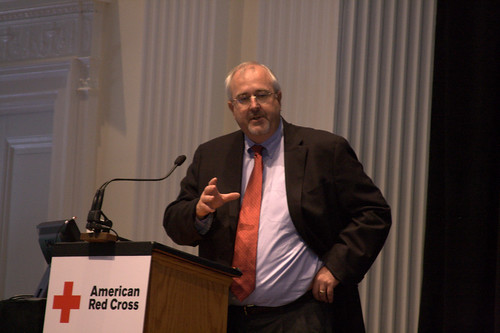
FEMA Administrator Craig Fugate (Photo: Shashi Bellamkonda)
Fugate often brings up the public’s “responsibility” in speeches including a keynote address I heard at the University of Colorado’s Natural Hazards Workshop:
“a recent survey found that only half of Americans have put together an emergency kit, and less than half – only 40 percent – have created a family emergency plan. I cannot emphasize enough just how problematic this could prove in a catastrophic environment, not only to the households, but to the efficacy of the overall incident management effort. Every family that fails to take even the most basic preparedness actions, such as having sufficient water and non-perishable food to support the family for at least 72, is a family that will pull responders and critical resources away from those who truly need such assistance, both the casualties of the disaster, and our most vulnerable populations, such as persons with disabilities and children…
Having a family disaster plan, keeping supplies for basic survival needs, and staying informed are the responsibility of every American.”
And, in fact, President Obama made that same point last year at the beginning of hurricane season when he said that preparing for disasters was a “personal responsibility” for Americans and a responsibility of citizenship:
“We just saw some statistics coming out of Florida indicating that a huge percentage of people in hurricane areas simply don’t make plans. They don’t have a plan, they don’t have a set of contingencies that will allow them to respond in an effective way. Those people who have the capacity to plan, they will thereby relieve some of the resources that the government has to provide and we can stay focused on those folks who are most vulnerable and have the most difficulty dealing with a storm. So I hope that message of personal responsibility sinks in…As we enter into hurricane season, I hope that everybody who’s watching is going to be paying attention and take seriously their responsibilities as citizens so that the entire country is ready.” [my italics]

President Obama presides over a FEMA hurricane preparedness meeting last year (White House photo: Pete Souza)
But despite the strong — and I would agree appropriate — rhetoric about personal responsibility and responsibility of citizenship, that approach has not become a major thrust of government’s primary preparedness messaging to the public, including on Ready.Gov and other local emergency management websites. Instead of telling people to prepare because it is a responsibility (you need to do this), government has used a softer ask when it comes to trying to get the public to prepare. To me, the it is time to try to do more “telling” and less “asking”.
The soft sell approach actually dates back to the creation of the Department of Homeland Security (DHS) and Ready.Gov. In an NPR “On The Media” story from 2003, I examined the government’s initial public service announcements that featured the first DHS Secretary Tom Ridge:
To ultimately be the victor in the war again terrorism we need all Americans to be engaged, down to the point where we ask mothers and fathers to think about doing some simple things at home to protect themselves and protect their children. [my italics]
In the PSA, Ridge is only asking Americans to think about doing — not telling them to do. Ready.Gov took a similar tack, which has continued to this day. The website’s “Make A Plan†section currently states: “You may [my italics] also want to inquire about emergency plans at places where your family spends time: work, daycare and school. If no plans exist, consider volunteering to help create one.”
Yet, if the government believes it is important for people to create an emergency plan both to help themselves and to make the job of first responders easier during a disaster then the web site should be willing to say something stronger than they “may also want to inquire.â€
For the NPR story in 2003, Tom Ridge’s spokesperson Susan Neely told me that focus groups had indicated that people wanted to be engaged on this scary topic in a “constructive way, not a mandate kind of way.” It was understandable to try that approach then. But seven years later with the needle on citizen preparedness having not moved very far, it is time to add another communications angle.
If indeed preparing for disasters is a responsibility of citizenship (which I think it should be), then it should been positioned that way highlighting the fact that you are preparing as much for others as yourself. PSA’s saying that people are imperiling the lives of first responders and their fellow citizens, particularly the vulnerable (ie. the elderly, disabled) not to mention your own family might be treated with a little more urgency.
As has been discussed often on the blog, when the nation wants to change social behavior it uses a carrot or stick. When it comes to preparedness, a carrot is more appropriate than “Click It Or Ticket”. However, a sterner “responsibility message would add a little oratorical “stick” to the mix. This new approach would not preclude still using the current softer approach, but it would add another arrow to the readiness quiver and signal this issue should be treated as a priority by the public.
The need for a stronger “responsibility” message is shared by most top officials of both political parties who have worked in citizen preparedness that I have spoken to. However, there has been a hesitation to use it in mass communications to the public where I think it would be most useful.
Former U.S. Homeland Security Secretary Michael Chertoff echoed the other leaders in an interview I did with him last Fall that preparedness was a new responsibility of citizenship of the 21st Century. President George W. Bush’s Terrorism Adviser Fran Townsend told me: “It should be every parent’s responsibility to make sure that they know their children’s school emergency plan and have a communications plan for their family.â€
And, former FEMA Administrator R. David Paulison in an interview told me that FEMA and local authorities are relying on the public to do its share: â€All the states, local communities working together cannot take the place of personal responsibility for taking care of yourself,†notes Paulison. â€If individuals don’t take that responsibility, this country is not going to be ready and be able to take care of everyone.â€
Another potentially useful messaging approach was suggested to me by former Miss Utah Jill Shepherd, who used citizen preparedness as her pageant platform. It can (and should) be included in the preparedness pitch that readying yourself and your family for disaster at home is a way you can contribute to the nation’s resilience complementing the work and sacrifice of those in the military. I believe that could be an effective approach.
I don’t believe the government should be afraid to explicitly tell the public that each of us can either hinder or help relief efforts by what they decide to do before and during a disaster. And, that it’s up to each of us to choose. I think that’s a choice and a challenge that might get people’s attention and maybe lead to action. And, since the other approaches being used to address this issue clearly have limitations, it’s definitely worth a try.
These icons link to social bookmarking sites where readers can share and discover new web pages.
Email Entry
Tags: Preparedness Ideas · President Obama
In a post this week on the social network website GovLoop, Andrew Krzmarzick asks a good question: “So which celebrity could bring awareness about a project or program being run by your agency, city or state?”
It’s a very relevant query for this blog as citizen preparedness has not had an ongoing high-profile celebrity spokesperson. To some in the readiness community, the absence of star power on the issue has been one reason for the lack of public attention. Though celebrities have been eager to participate in fundraising efforts after catastrophes like the Haiti effort), there is no big star who is singularly identified as a spokesperson for emergency preparedness.
The American Red Cross has used actresses Jamie Lee Curtis and Raven Symone as preparedness spokespeople. Maria Shriver, Honorary Chair of California Volunteers, has been outspoken on earthquake readiness. But a national spokesperson would be very helpful in publicizing the issue in a sustained way.

Brad Pitt working on a Make It Right housing project in New Orleans.
Former White House Terrorism  Adviser Fran Townsend and Terri Bischoff, the outgoing CEO of the Red Cross of Greater New York chapter both told me they think Angelina Jolie and Brad Pitt, who are rebuilding the homes in New Orleans’ Lower 9th Ward as part of the Make It Right redevelopment program, would be excellent spokespeople for disaster preparedness.
Personally, I’d like to see Jack Bauer a.k.a.Kiefer Sutherland be the spokesperson. Not only was his character phenomenally popular but the whole “24″ show is an argument for creating a family emergency communications plan. I think Jack would get the attention of Americans for the disaster issue as the “24″ did for eight seasons.
Your suggestions?

Jack and Kim Bauer could have used a family emergency communications plan.
These icons link to social bookmarking sites where readers can share and discover new web pages.
Email Entry
Tags: Media · Preparedness Ideas
Another major international disaster and another swift international response from the citizen volunteers of CrisisCommons.
CrisisCommons, as has been covered frequently on the blog, is, according to its website, “a global network of volunteers who help people in times and places of crisis. If you can use the Internet, a word processor, a cell phone or any other kind of technology, you can help.”

And in the wake of the catastrophic Pakistan floods, that growing network has mobilized itself throughout the world to help, just as it did after Haiti earthquake and the Gulf oil spill.
After a couple of CrisisCamp meetings and cross-continent calls, the CrisisCommons website has just posted a long list of tasks for individual citizens can contribute to remotely at http://wiki.crisiscommons.org/wiki/Pakistan/2010_Floods/Tasks, including contributing to the excellent mapping and reporting work of Open Street Map, Ushahidi, Sahana, and Tweek The Tweet.
Once again, after the Pakistan flood, CrisisCommons has displayed the incredible asset that is the average citizen, and the desire for those citizens to help out in an emergency. For an organization that is little more than a year old, it is doing amazing things and growing meteorically from disaster to disaster.
If you want an excellent video summary of the development of CrisisCommons and its future, I’d recommend watching the presentation given by Heather Blanchard (the organization’s one full-time employee) at the Red Cross’s Emergency Data Summit which was taped by C-SPAN here.
And if you would like to contribute to their work in Pakistan, check the tasks page here.
(UPDATE 8/23: On the CrisisCommons website, there is now an update on the activities of this weekend, including CrisisCamps London, Cambridge & Chile.

CrisisCommons volunteers working at the World Bank earlier this year.
These icons link to social bookmarking sites where readers can share and discover new web pages.
Email Entry
Tags: International · Preparedness Events
I am always looking for creative and new ways to bring attention to all types of emergency preparedness. One small example I saw today is that the state of Oklahoma has authorized the creation of a special license plate honoring the National Weather Center.
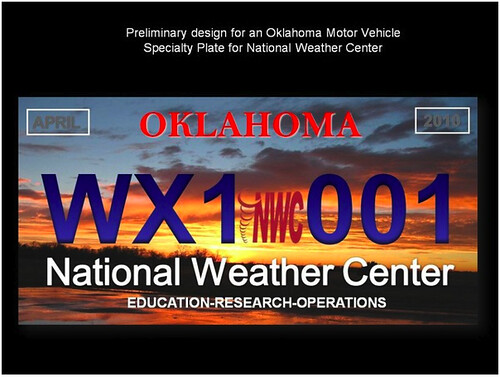
The catch is that the Oklahoma Tax Commission needs 100 prepaid applications will make the plate available. And, as of this week, only 30 people have applied. The deadline is October 1st. If you’re interested, the application is here.
Thanks to the Twitter feeds of @ounwcm and @altusem who brought this story to my attention.
These icons link to social bookmarking sites where readers can share and discover new web pages.
Email Entry
Tags: State Preparedness
August 21st, 2010 · 1 Comment
Readers of this blog know how excited I get about creative, well-planned emergency exerrcise that involve the public. So, I wanted to bring your attention to “Quakeville,” an two-day earthquake drill in Palo Alto, California that begins on September 11th. As described in an article at Palo Alto Online:
The ground is shaking violently. Family heirlooms and knickknacks are flying like projectiles off walls and shelves. Glass is shattering, and the rolling motion seems to go on forever. When the “Big One” strikes, residents could find their homes uninhabitable, and figuring out how to live in the hours, days and weeks after a major disaster will become their No. 1 concern.
The scenario is the focus of a Sept. 11 disaster drill planned for Barron Park residents, who will erect a tent city at Juana Briones Park. It won’t be a neighborhood picnic. People will have to bring their own tents, water and food. Grills won’t be allowed. There will be no electricity for the duration of the event, which runs from 3:30 p.m. till 10 a.m. the next day.
Some surprise incidents, mimicking possible real-life disaster scenarios, are planned to test people’s responses, according to event coordinator Lydia Kou. Dubbed “Quakeville,” the drill is designed to shake people out of their denial.
Quakeville will kick off a series of citywide disaster-preparedness events throughout September and October. Palo Alto Mayor Pat Burt and the Palo Alto/Stanford Citizen Corps Council have declared September as Emergency Preparedness Month citywide….
This is the first year that citizens will be involved in the “Quakeville” drill which may take on even more seriousness after a report this week that revised up the risk of earthquakes along the San Andreas Fault:
Quakeville will put disaster preparedness into the hands of the citizenry, who will be the first on the ground to deal with neighborhood emergencies, Kou said. ”It’s exciting because it involves all citizens. In the past, drills involved emergency volunteers only,” said Kou, who also is co-chair of the Palo Alto Neighborhoods block-preparedness-coordinator program and is a Barron Park Neighborhood Association disaster-prep leader.
Kou said Quakeville will help give residents a sense of what they might encounter, and need, when forced out of their homes and into close contact with many other people. ”Will you need earplugs in case the person sleeping in the tent next to you snores? Will you need hay-fever medicine? How will you entertain yourself and your kids?”
It’s funny that she mentions earplugs, because that is exactly the item I added to my ‘go-bag’ after spending a noisy day in a shelter during a hurricane drill in Brooklyn.
I am also supportive of the decision to undertake the drill on 9/11, which I think should be an official preparedness day in which exercises like the one in Palo Alto would be done throughout the U.S.:
“Sept. 11 is a very appropriate day for people to come together to commemorate friendships and lives lost,” she said, adding that the city is encouraging other neighborhoods to hold block parties on Sept. 11 to build community connections. ”It’s an act of remembrance,” she said…
One area she hopes to resolve is what to do with pets. For the Sept. 11 event, organizers are encouraging people not to bring their animals. But at tent city they’ll look for ways to resolve that concern, she said.

The Palo Alto Office of Emergency Services headquarters
These icons link to social bookmarking sites where readers can share and discover new web pages.
Email Entry
Tags: City Preparedness · Earthquake Preparedness · Preparedness Events
August 21st, 2010 · 1 Comment
A report released earlier this year by Columbia University’s National Center for Disaster Preparedness argues that “the U.S. remains unprepared to cope with the possibility of an attack on a major city by terrorists capable of acquiring and detonating an improvised nuclear device” — and urges a public education effort to inform Americans on what they should do in the event of a nuclear detonation to best mitigate its effects.
The study, “Regional Health and Public Health Preparedness for Nuclear Terrorism: Optimizing Survival in a Low Probability/High Consequence Disaster,” is authored by Irwin Redlener, Andrew L. Garrett, Karen L. Levin and Andrew Mener. It was released while this blog was on hiatus so I am posting it now.
The authors contend that our lack of preparedness is in part a result of a lack of understanding that there are things that actually can be done in response:
Although the detonation of a low-yield IND in an American city is one of the 15 planning scenarios developed by the White House Homeland Security Council for use in security preparedness activities, local and regional emergency planning activities have not given attention commensurate to this threat. Barriers to planning for such a catastrophic event are not well understood but may be related to fatalistic beliefs or concepts of improbability, with many believing that other disasters are more probable and merit the focus of emergency planners.
But protective actions will be most useful if they are known in advance:
Following a nuclear detonation, a response based on threat-specific strategies will be essential to maximize time-sensitive life-saving opportunities. Public protective actions to reduce exposure and injury, critical within the first hours, will depend greatly upon a well thought out, pre-event messaging strategy and the ability to communicate easily-understood information to the public. The risk for injury and nuclear detonation effects does not end after the initial blast; the public must understand the correct protective actions and when to take them throughout the response and recovery phases.

The report explains that “in the minutes and hours after the detonation of an IND, the public would need to make a few key decisions in order to maximize their chances of surviving and minimize their injuries and long-term health effects”:
[Read more →]
These icons link to social bookmarking sites where readers can share and discover new web pages.
Email Entry
Tags: Nuclear Terrorism · Preparedness Reports
August 20th, 2010 · 1 Comment
In a memo to FEMA Administrator Craig Fugate this week, DHS Secretary Janet Napolitano ordered a “two-year progressive national drilling program which increases the total number of exercises and culminates in a full-scale, biennial intergovernmental National Level Exercise (NLE).”
Thanks to Bill Cumming for sending me the memo; he will be writing about it on his Vacation Lane Blog.
Though Napolitano’s memo has broad policy implications, I wanted to mention (due to the focus of this blog) a particular aspect — the involvement of the public in emergency drills which has been advocated by this blog. As the beginning of the memo, Napolitano writes:
A national exercise program must focus not only on the front lines of prevention, protection, response and recovery–our nation’s first responders-but also engage elected and appointed leadership at all levels of government, the public [my italics] and the private sector.
However, the rest of the memo does not mention any civilian involvement in the exercises. Though I would imagine that this will be worked out as the drilling program is fleshed out. As I have written extensively on the blog, I feel that including the public in these drills is useful both for the first responders and citizens.
Most every top national and local government preparedness official I’ve spoken to believes that preparedness drills for the public would increase citizen readiness and engagement. The difficulty of course is organizing these events. So, if the government is going to undertake major exercises, the opportunity should not be lost to involve the citizenry. Short of an actual incident, a drill is the best way to get people to think through what they would do if something actually happened. (Of course, the surprise or “no notice” drills might be difficult to integrate civilians who are not ordinarily on site but where possible citizens should be included.) It’s an issue that this blog will be following closely.
Napolitano’s memo comes in the context of a debate in the emergency management community about drilling policy as described in an article in April by the Washington Post’s Spencer Hsu:
The decisions are playing into a quiet debate about the future of the large-scale national exercises. Convinced that the drills are the best way to determine whether the nation is prepared for a disaster, some emergency planners and state officials say they fear that as the federal government cuts costs, it may dumb down the tests so participants will pass them more easily. Shying away from the toughest problems, they say, risks repeating the mistakes that were made after Hurricane Katrina, when an unprepared White House and Louisiana governor clashed over who was in charge, how to allocate resources and whether to send in the military.
White House officials and Homeland Security Secretary Janet Napolitano say they are trying to improve the national exercises, not undercut them. The drills have grown into unrealistic, costly and over-scripted productions, Napolitano has said, an “elaborate game” rather than opportunities for officials to work through problems.
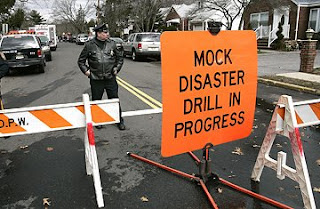
In the memo, Napolitano asked FEMA’s Fugate to:
[Read more →]
These icons link to social bookmarking sites where readers can share and discover new web pages.
Email Entry
Tags: Department of Homeland Security · Federal Emergency Management Administration
August 19th, 2010 · 1 Comment
You know you’ve made it in New York City when the Empire State Building’s lights promote your cause. So, maybe preparedness is catching on in the Big Apple.
The City of New York’s Office of Emergency Management must be thrilled that the Empire State Building will be lit up in “READY New York Yellow” on the evening of September 2nd, which is the kickoff day for the City’s National Preparedness Month activities.
I’ll be handing out READY New York pamphlets in Columbus Circle that morning as part of my CERT responsibilities. Last year, participants distributed more than 100,000 preparedness guides and 30,000 bottles of hand sanitizer throughout the five boroughs during 2009’s National Preparedness Month Kickoff events.
Hopefully, it will be a clear night and New Yorkers who look up in the sky that night will be reminded to go to the Ready New York website for more information on preparedness.
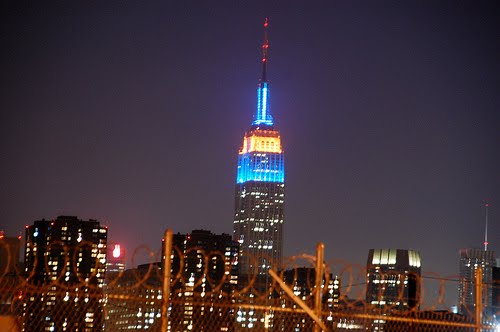
The Empire State Building lit up in New York Mets’ blue to celebrate the team’s appearance in the World Series. It will be awash in “READY New York Yellow” on the night of September 2nd.
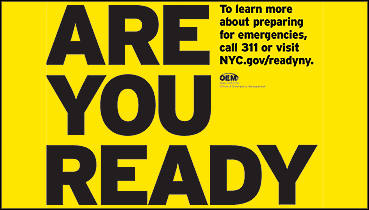
“READY New York Yellow”
These icons link to social bookmarking sites where readers can share and discover new web pages.
Email Entry
Tags: City Preparedness · Preparedness Events · Preparedness Ideas
Last week, I visited the three-member Ready Campaign team — Director Darryl Madden, Deputy Director Rebecca Marquis, and Campaign Specialist Chris Bernstein – at FEMA headquarters to get a briefing on the 7th annual National Preparedness Month (NPM) which begins in less than two weeks.
NPM, sponsored by the Ready Campaign in partnership with Citizen Corps and the Ad Council, “is designed to encourage Americans to take simple steps to prepare for emergencies in their homes, businesses, and communities.”
So far, there are 2,807 Coalition Members, who will be organizing preparedness activities during the month, which surpasses last year’s 2,700 (though is still short of 2008’s 3,200).
According to Madden. there will be a couple areas of special emphasis this year.
First, there will be a special effort during the Month to get Americans to create an emergency communications plan for their family. In fact, FEMA head Craig Fugate told me in an interview last week that if citizens are going “to do one thing” this National Preparedness Month it is to develop a family plan — described on most emergency management websites. In order to help Americans do the emergency planning, Ready.Gov and the Ad Council are offering some online tools to create a printable comprehensive Family Emergency Plan and an email/text containing basic information that can be shared with others.
Madden said he also hopes the Americans will — if they have not already — check in with their workplaces and kids’ schools about their emergency plans. I mentioned to him that I thought the language in this area on Ready.Gov “Make A Plan” section was not strong enough:
You may [my italics] also want to inquire about emergency plans at places where your family spends time: work, daycare and school. If no plans exist, consider volunteering to help create one.
To me, if the government believes it is important for people to create an emergency plan both to help themselves and to make the job of first responders easier during a disaster then the web site should be willing to say something stronger than they “may also want to inquire.” (”should” would be preferable.) Madden said he agreed.
Another area of focus during the Month is to highlight the growing number of ways that Americans can access(and provide disaster preparedness, response and recovery information, particularly using new technologies such as the new mobile FEMA site, m.FEMA.gov. Madden says that going beyond National Preparedness Month, the Ready Campaign will be continuing to better “tailor” FEMA’s resources to the public’s needs with more platforms and interactivity.
For more information on NPM, click here. To check the NPM activity calendar or add your event, click here. For a NPM widget, click here.  To sign up as a NPM partner, click here.
These icons link to social bookmarking sites where readers can share and discover new web pages.
Email Entry
Tags: Federal Emergency Management Administration · Preparedness 2.0 · Preparedness Events