On the anniversary of 9/11, I wanted to repost some proposals to help raise citizen preparedness. DHS Secretary Napolitano has said that public readiness is a priority and the Department has begun the process of engaging Americans in their own homeland security. The ideas below come largely from discussions I have had with people involved in all aspects of the issue, my own experiences as a parent and CERT member in New York City, as well as from the input I have received from readers since the inception of my blog. As always, I welcome your thoughts and suggestions:
* CREATE CITIZEN PREPAREDNESS TASK FORCE — The lack of progress to date on public readiness and engagement underscores the need to develop new ways of approaching the issue. DHS Secretary Napolitano should create a Citizen Preparedness Outreach Task Force to assess the current state of public readiness and work on developing new approaches. At present, there is no clear social education analog. In fact, in its recent report, the Commission on the Prevention of Weapons of Mass Destruction Proliferation and Terrorism recommended the Administration make citizen engagement a priority. But Chairman Bob Graham told me that the ‘WMD Commission’ did not did not find anything suitable it could recommend and that something new has to be developed.
* BETTER DEFINE WHAT IT MEANS TO BE ‘PREPARED’ — A recent American Red Cross survey indicated that 93% of Americans are not prepared for disasters. The truth is that no one can be fully prepared, but there is a need to offer the public a clearer definition — including a minimum level — of preparedness. That would not only include storing tangible supplies (ie. at least 3 days of food & water) but also knowledge about potential threats that every American should know. That doesn’t mean overwhelming people with too much information, but making sure they are at least familiar with some basics. (For example, the first time citizens hear about a ‘dirty bomb’ from government officials should not be in the moments after one has been exploded.)
* SUPPORT & REPORT ON STATE/LOCAL PREPAREDNESS EFFORTS — Provide adequate seed money for state and local government to bolster civilian preparedness programs and link the grants to performance. Encourage authorities to report publicly on their level of citizen preparedness and create metrics for better measuring civilian readiness. Find interested governors to take on leadership roles and create pilot models in their states. Expand support of disaster volunteer opportunities including Community Emergency Response Teams (CERT) and other community programs, which serve as catalysts for organizing local efforts. There is a need to employ both “bottom/up†and “top/down†approaches to disaster preparedness combining state, local and community leadership and citizen involvement with federal commitment and focus. Ensure that government authorities can competently respond to disasters but also more strongly emphasize the need for the public and local communities to be prepared and self-reliant, particularly in the first 72 hours after a disaster.
* HIGHLIGHT & SPREAD MODELS FROM AROUND U.S. & OTHER COUNTRIES — There is a need to help promote and implement best practices from communities around the U.S. and draw, where applicable, from British and Israeli experiences. One model may be the United Kingdom’s National Risk Register, which sets out publicly the government’s assessment of the likelihood and potential impact of a range of different public health, natural and terrorist risks. It is designed to increase awareness of the kinds of risks the UK faces, and encourage individuals and organizations to think about their own preparedness. The Register also includes details of what the Government and first responders are doing to prepare for those emergencies and the role of citizens in those plans
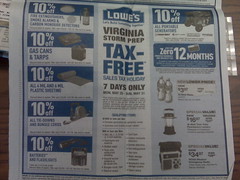
* OFFER SMALL CARROTS – Encourage states to create tax-free periods for consumers to purchase preparedness supplies. Provide a tax write-off for citizens to buy preparedness-related products as a way to promote participation and to signal governmental commitment. Also, consider targeting assistance to citizens who cannot afford to prepare. The bottom line is that in most instances to change social behavior there needs to be some incentives involved.
* BRING IN BUSINESS TO HELP MARKET PREPAREDNESS –Design and roll out a full service preparedness marketing campaign with help from the private sector. Galvanize business to take on disaster preparedness in the same way they have with disaster response, most notably in the aftermath of Hurricane Katrina (ie. big box stores, packaged goods manufacturers, bottled water companies, wireless industry). In addition, work with private sector to alleviate existing obstacles to personal preparedness (ie. work with health care industry to allow for extra prescription medicine in advance of a disaster.)
* DON’T BE AFRAID TO TELL THE CHILDREN — Put more emphasis on educating young people on preparedness by piggybacking on other related school-based social education efforts, most prominently fire safety. The challenge is the both the decentralization of the nation’s education system and the already high curricula demands on teachers. Yet, an effective fire education program was implemented in the schools beginning in the 1970’s, and there would seem to be a perfect fit to integrate a preparedness module into that existing program. The federal government should work with state and local officials as well as fire and education officials to determine how best to accomplish that objective.
* EMBRACE AND ACCELERATE PREPAREDNESS 2.0 — There is a need to better inform the public on the potential on 21st century personal technology to prepare for and respond to 21st century emergencies. We must make Americans more aware of the capabilities of the technology at their fingertips (ie. wireless devices, social networking sites) and integrate it into disaster planning and response. The public’s new ability to access and distribute information offers both an opportunity and a challenge to government authorities. As a start, every governmental preparedness web site should add a cell phone and an extra battery (or other power source) to the basic components of their recommended disaster supply kit. Many private companies are working on applications for citizen emergency communications. Those business efforts need to be integrated with official alerts (ie. the new iteration of the Emergency Alert System) and unofficial citizen-based social media (as well as the news media). Both the content and distribution channels of emergency communications are changing and new models need to be developed.
* ‘SEE AND SAY’ SOME MORE – Build upon the initial success of ‘Say Something, See Something’ -type citizen information campaigns by providing the public with more specific guidance on how to assist law enforcement and, without giving away sources and methods, offering more feedback on the information they have provided. Law enforcement officials are concerned about societal complacency almost eight years since 9/11, but have not determined how to communicate to the public a more candid – yet calm and balanced – picture of the threat and how they can best help.
* EXPAND EMERGENCY DRILLING OPPORTUNITIES TO PUBLIC –Increase opportunities for citizens to participate in disaster drills, which would help people focus on the issue and work through the key questions everyone should ask before a disaster (ie. How will you get information and communicate with your family? Do you know the emergency plan of your children’s school?). Most every top homeland security/emergency management official I have interviewed has told me that broader public disaster exercises would be helpful in a number of ways, but there has not been a concerted effort to expand drilling opportunities to the public.
* ESTABLISH AN OFFICIAL PREPAREDNESS DAY — Create a National Preparedness Day to focus public attention before disasters, including briefing citizens, conducting drills, and filling emergency kits. A helpful model is Japan’s Disaster Prevention Day held on the anniversary of the catastrophic 1923 Tokyo earthquake.
* CREATE CITIZEN PREPAREDNESS OFFICE/SPOKESPERSON –Consider establishing a national citizen preparedness office or a high profile spokesperson to highlight and help coordinate efforts around the U.S. and ensure citizen preparedness remains a priority. Work with American Red Cross to create an effective advocate for the general public on emergency preparedness in the same way disabled and pet groups have done for the disaster needs of their communities over the past several years.
* BUNDLE CITIZEN PREPAREDNESS PROPOSALS TOGETHER INTO “CITIZEN PREPAREDNESS INITIATIVE†– For too long, well meaning public preparedness efforts have gotten lost or have been ignored by the public. That’s in large part that they have not been packaged and presented as being specifically directed to citizens. But if the government would assemble these small disparate proposals listed above into an overall citizen preparedness package it would have a better chance of getting attention and gaining some traction. Ultimately, making inroads on citizen preparedness is less a matter of money than it is of focus and attention.
These icons link to social bookmarking sites where readers can share and discover new web pages.
Mary and her husband Frank lost their 24-year-old son, Brad, in the World Trade Center attacks eight years ago today. Soon after, she founded Voices of September 11th as a clearinghouse for information and support for those affected by the 9/11 attacks. The group now serves more than 7,000 members with information, outreach and programs on the many aspects of post-9/11 life, with a particular focus on helping 9/11 families, survivors, rescue and recovery workers and others affected by the attacks.
Voices has created the 9/11 Living Memorial, an amazing digital archive which commemorates the lives that were lost and documents firsthand accounts of rescue workers and survivors at the World Trade Center, the Pentagon, and Shanksville, Pennsylvania.
Mary and Frank have made emergency preparedness a central part of the Voices of September 11th mission. And in this video, shot at the Voices offices in New Canaan, Connecticut, she makes the important point that preparation and information could have saved lives at the World Trade Center on 9/11. Mary says we must learn from history and all of us should make sure our homes, schools, workplaces and communities are prepared for emergencies.
MARY FETCHET, VOICES OF SEPTEMBER 11th (ABOVE)
These icons link to social bookmarking sites where readers can share and discover new web pages.
As we mark the anniversaries of 9/11 and Hurricane Katrina, I wanted to again mention a bill which would create a ‘tax holiday’ for preparedness supplies and “Go-Bags,†introduced in the New York State Assembly by Assemblyman Jonathan L. Bing. Under the legislation, New Yorkers would be able to buy emergency supplies without paying state sales tax between September 1st-11th and purchase pre-made “Go-Bagsâ€Â tax free throughout the month. The bill would also declare September as “Emergency Preparedness Month†in New York.
In 2007, I met with Assemblyman Bing staff to discuss emergency preparedness in his Manhattan district (where I live) as well as the State as a whole. He thought the idea of a tax free period could have a significant catalytic impact on citizen readiness and decided to introduce legislation. The tax-free period for supplies would run from September 1-September 11 commemorating the time between the anniversaries between Katrina and 9/11. “Go-Bags†would be exempt all month but only if they met certain minimum requirements and were sold for $75 or less. Some of the individual emergency items would have similar price restrictions.
An important part of personal preparedness is having requisite supplies as well as a “Go Bag†— a collection of items packed in an easy-to-carry, accessible knapsack – that can be ready in a matter of seconds. Storing supplies are just one step in becoming prepared, but getting people to take that initial step is crucial. In addition, a special tax holiday makes it more likely a) private businesses will add their marketing expertise and capacity to the preparedness effort and b) the media will provide coverage of the issue. Officials in Virginia and Florida, both of which recently implemented this idea, say the results have been positive.
The bill has been introduced in the Assembly with twenty other sponsors and has been referred to committee for consideration. New Yorkers should contact your local legislators to encourage them to support the bill. Those in other states should ask their elected officials to consider the idea.
“The New York City Office of Emergency Management recommends that residents prepare for emergencies by buying and storing certain basic emergency supplies as well as creating “Go Bags.” Unfortunately, few have the requisite emergency supplies. Fewer still have heard of a “Go Bag,” which is a collection of items you may need in the event of an emergency packed in an easy to carry container that is accessible in case you need to leave your home in a hurry. By providing an initial New York City sales tax holiday from September 1 through September 11 for individual emergency supplies, with a sales tax holiday for pre-made “Go Bags” for the month of September, we can encourage New Yorkers to begin to be prepared for whatever emergency they may face. New York State Assembly Member Jonathan Bing has introduced legislation on this issue and Florida enacted a similar tax free period aimed at hurricane preparedness in 2006.
I hope the increased profile of the idea will soon result in some action here and across the nation.
The report looks at the challenge of strengthening the nation’s homeland security strategic risk management and notes the role of the public as an important stakeholder in that effort. In its introduction, the study observes that “risk tradeoffs are often political decisions that require public input, but mature methodologies for receiving such input have not been developed.”
As a result, the authors suggest in their third of 10 recommendations that:
“The president should discuss risk priorities with the American people. Before the country faces another large scale or catastrophic domestic event, the president needs to engage with the public about the government’s strategy and resource allocation decisions. The president needs to be candid with the American people about why we need homeland security and what it can reasonably achieve.
The H1n1 emergency provides an excellent launching off point for this discussion. Americans need to understand the investments that the government has made, but also the risks that the government has chosen to accept. facing this hard truth will help to stimulate a public debate on what the ‘acceptable’ level of risk may be to a set of potential threats. This debate can then send signals to policymakers to inform their resource allocation judgments.
A public dialogue should also engage community leaders, experts, and policy makers at the federal, state, and local levels to identify the most pressing risks and develop strategies for mitigating them. These strategies will all involve tradeoffs and sacrifices, but they are necessary to deal with the risks we face today and prepare the nation for the risks we are likely to face decades from now.
A consistent, mature message on this subject will help to build long-term public support for security programs and help to reduce disillusionment with the concept of homeland security resulting either from the sense that resources are being wasted because incidents are not occurring or when serious harm occurs despite our investments.”
The competition is open to everyone with an interest in homeland defense and security. The essay should be no more than five pages, single spaced. The deadline for submission is January, 31 2010. Finalists will be announced no later than May 31, 2010.
The winner will receive a $1500.00 cash award and an invitation to the Center for Homeland Defense and Security located at the Naval Postgraduate School in Monterey, California where he/she will be recognized at the CHDS Forum. Additionally, the winning and four top finalist essays will be considered for publication by Homeland Security Affairs, the online journal published by the Naval Postgraduate School’s Center for the Homeland Defense and Security.
The most high profile American associated with citizen preparedness may be Lt. Gen. (Ret.) Russel L. Honore who came to national prominence for his work in the aftermath of Hurricane Katrina. In the four years since, Honore has been an outspoken advocate for focusing more national attention and resources on community readiness. In a new book, Survival: How A Culture of Preparedness Can Save You and Your Family (Atria), he offers some ideas on what to do and how to get there.
The book (written with Ron Martz) uses Honore’s life experiences, particularly his work as commander of Joint Task Force Katrina, to help illustrate what he believes is necessary to improve the nation’s ability to deal with disasters of all kinds.
Among his proposals: disaster preparedness should be taught in elementary and middle schools; insurance companies should give weather radios to their customers or provide a rate break for those families that have them in their homes; weather radios should also be required, just as smoke alarms are, in rental properties; Red Cross debit cards should be issued to poor people in areas frequently hit by extreme weather; National Preparedness Month should be in May not September; and a National Preparedness Plan should be developed.
In a recent interview, Honore told me that the nation must put as much focus into disaster preparedness as it does to disaster response. He noted that ironically America’s resources, including the expectation that FEMA and other responders will always come to the rescue, gets in the way of its preparedness efforts. He recounted a recent visit to Cuba which has an extensive citizen readiness system, including regular hurricane drills, inspections by trained high school students and extensive pre-storm mitigation (ie. moving refrigerators and stoves from potential flooded areas): “They are a poor country.  They can’t replace them.”
But he said that he feels there is movement in the direction towards creating that culture of preparedness in the U.S.. He cites FEMA Administrator Craig Fugate frequent public statements on the topic and another interesting metric. “It used to be when you googled disaster preparedness there were 30,000 hits, now you get several million.” Honore is currently an analyst for CNN and frequently gives speeches around the U.S. (more often than not on citizen preparedness). To purchase Survival, click here.
LT. GEN. (RET.) RUSSEL HONORE (ABOVE)
These icons link to social bookmarking sites where readers can share and discover new web pages.
FEMA Administrator Craig Fugate went to the offices of Google in Mountain View, California to discuss how the company and the industry can help the agency’s disaster preparedness and response efforts.
Fugate shot a short video there (below) about the goals of the meeting which he says was to help the government figure out how “we share information in such a way that it helps you understand what your threat is, what you need to do to protect yourself and more importantly how to get the best information when disaster strikes.”
CRAIG FUGATE TALKS ABOUT HIS DISCUSSIONS AT GOOGLE TODAY (ABOVE)
These icons link to social bookmarking sites where readers can share and discover new web pages.
The Department of Homeland Security (DHS) Secretary Janet Napolitano and Girl Scouts of the USA CEO Kathy Cloninger today unveiled a Girl Scout preparedness patch-designed to engage Girl Scouts and their families in personal preparedness for all emergencies-and announced a new affiliation between DHS Citizen Corps and the Girl Scouts to advance community preparedness nationwide. ”As a former Girl Scout,” said Napolitano, “I know the ‘Be Prepared’ motto well-and I look forward to working with the Girl Scouts to spread the preparedness message to all of our nation’s citizens.”
The preparedness patch program, developed by the Girl Scout Council of the Nation’s Capital and the Federal Emergency Management Agency (FEMA), provides critical emergency preparedness information and activities for all levels of Girl Scouts. The steps and activities required to receive the patch include identifying and preparing for potential emergencies; learning about local alerts and warning systems; and engaging in community service.
In addition to collaborating on the new patch, Secretary Napolitano and Ms. Cloninger also signed an agreement formalizing an affiliation between Citizen Corps and the Girl Scouts that creates a partnership to motivate young women to become community leaders in emergency management and response fields and raises public awareness about personal preparedness, training and community service opportunities.
These icons link to social bookmarking sites where readers can share and discover new web pages.
A bill introduced today by the U.S. Senate Homeland Security Committee’s Chairman, Sen. Joe Lieberman (ID-CT), and its ranking Republican, Sen. Susan Collins (R-ME), offers several initiatives to improve the government’s information and planning for the public in the event of a terrorist attack from weapons of mass destruction (WMD).
“The Weapons of Mass Destruction Prevention and Preparedness Act of 2009″ aims to implement the recommendations of the Congressionally-mandated WMD Commission which released its report, “World At Risk” last year in an effort to help the nation prevent and prepare for terrorist attacks from biological weapons and other weapons of mass destruction. The Lieberman/Collins legislation would:
· Require DHS to designate the most dangerous pathogens which have significant potential to be used effectively in a biological attack.
· Require DHS to set new security standards for labs using the most dangerous pathogens, including risk assessments, personnel reliability programs, and staff training.
· Require a national strategy for dispensing antibiotics and other medicines to the public and expand a pilot program for using the Postal Service to dispense them.
· Require communications plans to convey instructions to the public – including whether to evacuate or shelter-in-place – in the critical moments after an attack.
· Support a National Bioforensics Analysis Center to identify the perpetrator of a WMD attack rapidly.
· Provide personal medical kits to emergency responders in order to enable them to respond quickly to a WMD attack without jeopardizing their own safety.
· Require DHS and the Federal Bureau of Investigation to provide better terrorism threat and risk assessments to the public.
· Promote citizen and community preparedness for WMD attacks, including by authorizing grants to States.
WMD Commission’s report put a special emphasis on the public’s role in WMD preparedness. In fact, The report’s final chapter, titled “The Role of the Citizenâ€, recommends that “the next administration must work to openly and honestly engage the American citizen, encouraging a participatory approach to meeting the challenges of the new century.â€
Commission Co-Chair Bob Graham told me in an interview that educating Americans on the threat of WMD’s should be an “urgent†priority. Part of that education process I believe is to further explain the term WMD and how some threats would cause far more destruction than others. I think this legislation is an important part of a new effort to improve the nation’s citizen preparedness and engagement, and I will be following its progress closely.
These icons link to social bookmarking sites where readers can share and discover new web pages.
“Preparedness is an essential element of a resilient and secure Nation. My Administration has made preparedness a top priority, and we are working every day to ensure our country stands ready to respond to any disaster or emergency — from wildfires and hurricanes, to terrorist attacks and pandemic disease. Our goal is to ensure a more resilient Nation — one in which individuals, communities, and our economy can adapt to changing conditions as well as withstand and rapidly recover from disruption due to emergencies.”
Though much of the proclamation contains normal preparedness boilerplate, particularly striking is the prominence of the concept of ‘resilience’ which is clearly becoming a central principle of the Administration in this area (It also has a new central place in the latest Dialogue on the Quadrennial Homeland Security Review.)
These icons link to social bookmarking sites where readers can share and discover new web pages.